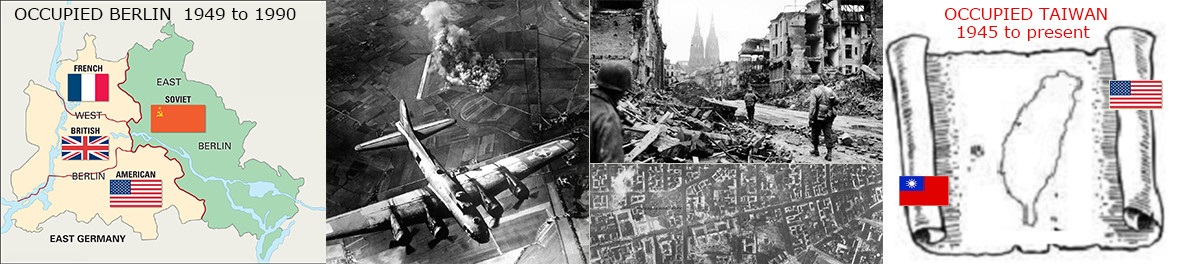
United States Court for Berlin March 14, 1979 Summary
US v. Tiede
Introduction:
* Herbert J. Stern, United States Judge for the District of New Jersey, sitting as United States Judge for Berlin by appointment of the United States Ambassador to the Federal Republic of Germany.
This is a criminal proceeding arising out of the alleged diversion of a Polish aircraft by the defendants from its scheduled landing in East Berlin to a forced landing in West Berlin. United States authorities exercised jurisdiction over this matter and convened this Court.
The special nature of this Court and the unusual position taken by the United States Attorney for Berlin require an extensive account and analysis of the history of the occupation of Berlin, the jurisdictional basis of this Court, and the limitations, if any, on the Secretary of State and the American authorities who govern the 1.2 million people who reside in the American sector of Berlin. The Court holds that the United States Constitution applies to these proceedings and that defendants charged with criminal offenses before the United States Court for Berlin have constitutional rights, including the right to a trial by jury.
Organization of the decision:
I. FACTUAL BACKGROUND
II. HISTORICAL BACKGROUND
A. Overview of the Allied Occupation of Germany since World War II.
1. The Occupation of Germany.
2. The Occupation of Greater Berlin.
B. The Exercise of Judicial Authority Under the Occupation.
1.The Occupation Courts in Germany.
2. The United States Court for Berlin.
III. APPLICATION OF THE UNITED STATES CONSTITUTION TO THESE PROCEEDINGS
It is appropriate to visualize a hierarchy of types of United States involvement in the governance of overseas territories. For incorporated territories, which are in many cases territories on their way toward full statehood, the full panoply of Constitutional rights is applicable. Next there are those territories, as yet unincorporated, which are guarantees most or all Constitutional safeguards by virtue of act of Congress. Then there are unincorporated territories now governed by the King [v. Morton, 520 F.2d 1140] doctrine, where the constitutionality of Congressional failure to extend the provisions of the Bill of Rights is determined on the basis of a factual inquiry into the feasibility of applying the Bill of Rights at least as to American citizens. In all of these territories, the United States exercises sovereignty ....
The very last in the hierarchy of types of United States governing authority overseas is United States occupation and control pursuant to conquest. In such a situation international law prescribes the limits of the occupant's power. Occupation does not displace the sovereignty of the occupied state, though for the time being the occupant may exercise supreme governing authority. Nor does occupation effect any annexation or incorporation of the occupied territory into the territory or political structure of the occupant, and the occupant's constitution and laws do not extend of their own force to the occupied territory.
IV. THE REQUIREMENTS OF THE CONSTITUTION IN THESE PROCEEDINGS
A. The Question Presented
B. The Extraterritorial Application of American Law
C. The Fundamental Nature of the Right to Trial by Jury
D. The Significance of the Nature of the Tribunal
E. Use of Jury Trials in Previous United States Occupation Courts
F. Constitutional Rights Afforded to Aliens
APPENDIX
Office of the U.S. High Commissioner for Germany
Berlin Element, United States Sector
Law No. 46, United States Court for Berlin
The United States High Commissioner enacts as follows:
Article 1
United States Court
Article 2
Personnel
Article 3
Jurisdiction
Article 4
Process
Article 5
Review of Decisions
Article 6
Cases Removed or Transferred from German Courts
Article 7
Repeals and Transitional Provisions
Article 8
Effective Date and Area of Applicability
Done at Bad Godesberg, on April 28, 1955.
JAMES B. CONANT
United States High Commissioner for Germany

|